|
Click the comments link on any
story to see comments or add your own.
Subscribe to this blog

RSS feed
|
Home
19 Dec 2010
The Holomaxx case grinds on to its
inevitable conclusion, as Microsoft files a motion to dismiss all claims,
and a crushing brief
explaining why all of Holomaxx's claims are unsupported by facts,
specifically contrary to law, internally contradictory, and in a few
cases, just stupid. (Those are my words, not theirs, but what else
can you call a complaint that Microsoft wasn't authorized to access their
own mail servers?)
They make reference to many familiar cases, particularly
E360 vs. Comcast, which had very similar facts, and which
they cite in the first paragraph:
As a federal judge recently described a similar e-mail marketing
service, "[s]ome, perhaps even a majority in this country, would
call it a spammer."
I won't go through the brief in detail, but if you're looking for
a comprehensive
33 page description of why spam filtering is absolutely, definitely,
unarguably, without question, 100% legal, here it is.
Stable link is https://jl.ly/Email/holo3.html
15 Dec 2010
In early November, a hitherto obscure company called
Holomaxx filed two lawsuits
against Yahoo and Microsoft/Hotmail, complaining that they weren't delivering
mail from Holomaxx, and against Return Path and Cisco/Ironport, claiming
that they were were falsely defaming Holomaxx as a spammer.
As I said at the time, regardless of whether
Holomaxx is sending spam, this case is
devoid of merit for a variety of reasons. Earlier this week, Holomaxx
retreated a little, dismissing the charges against Return Path and Ironport.
The court filings are uninformative, one sentence dismissing each defendant
without predjudice, which means that they could (in theory at least) sue
them again later.
Ken Magill noted this first, with a comment from Return Path just
saying that they're pleased to be out of the case.
Microsoft is supposed to respond on Friday, so assuming they do
I'll see if they say anything interesting.
Stable link is https://jl.ly/Email/holo2.html
03 Dec 2010
Back in August, FTC chair Jon Leibowitz suggested an Internet
do-not-track registry, analogous to the telephone do-not-call registry.
At the time, I thought it wasn't a good idea
for both technical and non-technical reasons.
This week, the FTC published an
online
privacy report recommending the same thing, and Rep. Ed Markey
promises to offer a bill next year to mandate do-not-track
for children.
With all this interest, might it be a good idea now? Maybe.
See more ...
Stable link is https://jl.ly/Internet/donottrack2.html
01 Dec 2010
An article
in the New York Times reports on FCC Chair Julius Genachowski's plan to
regulate ISPs to be "neutral."
The text of his speech says:
Thus, the proposed framework would prohibit the blocking of lawful
content, ...
He probably didn't intend to require that all CAN SPAM compliant spam
be delivered, but that's what his words mean, since that variety of
spam is legal in the U.S.
I can't see how the FCC can do this, since there is specific statute
law that says that spam blocking is allowed, but it sure will create
headaches for ISPs as spammers complain to the FCC about blocking
their junk.
The Republicans in Congress (not usually my heros) will probably shoot
this down, but if it shows any chances of going somewhere, it'll be bad.
Stable link is https://jl.ly/Internet/genach.html
29 Nov 2010
All effective spam filters use DNS blacklists or
blocklists, known as DNSBLs.
They provide an efficient way to publish sets of IP addresses from which the
publisher recommends that mail systems not accept mail.
A well run DNSBL can be very effective; the Spamhaus lists typically catch
upwards of 80% of incoming spam with a very low error rate.
DNSBLs take advantage of the existing DNS infrastructure to do fast,
efficient lookups.
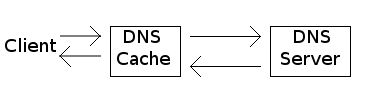
A DNS lookup typically goes through three computers, like this:
See more ...
Stable link is https://jl.ly/Email/v6bl.html
17 Nov 2010
Last week I blogged about
Melaleuca v. Hansen, a CAN SPAM case that was recently
decided by an Idaho court.
This week, they're back with
a new case
that is almost identical to the last one.
Last time, the court decided, among other things, that Melaleuca
didn't have standing to sue because it contracts its mail service
to an ISP called IP Applications, the ISP assigned its CAN SPAM clains
to Melaleuca, but not until after filing suit, which the judge said
was too late. This time, the claims are assigned before the suit
started, so that particular defect is fixed, but all the other problems
with the suit remain, most notably the absurd 9th Circuit rule that
plaintiffs show specific harm from the specific messages they're
suing about.
The only interesting bit of this case is the question whether the ISP
can assign its CAN SPAM claims to someone else, which I believe has
never come up before.
I fear this may be another Gordon, a case with lousy facts that
sets a precedent putting yet another needless hurdle in the way of
subsequent reasonable CAN SPAM cases.
Venkat has a longer take on this suit, with comments about the procedural
as well as substantive problems this suit has.
Stable link is https://jl.ly/Email/mela2.html
09 Nov 2010
Back on October 21 I found some bogus charges on my credit card bill.
So I called up the bank, had them taken off, and the bank changed
my card number.
They suggested I look at my credit report and put a fraud alert on it.
I went to annualcreditreport
(the only one of many similarly named sites that is legitimate), and got
my Equifax credit report.
See more ...
Stable link is https://jl.ly/Email/equispam.html
08 Nov 2010
The case Melaleuca v. Hansen has been moving slowly through Idaho federal
court since 2007.
On Sept 30 the court
decided in favor of the defendants.
Although the outcome is probably correct, the court's decision perpetuates
the misreading of CAN SPAM from the infamous Gordon case that makes
it in practice impossible to win a CAN SPAM case in the 9th Circuit.
See more ...
Stable link is https://jl.ly/Email/melaleuca.html
05 Nov 2010
A small company in suburban Philadelphia called
Holomaxx recently filed two lawsuits
against large webmail providers, complaining that they weren't delivering
mail from Holomaxx.
The first
suit is against Microsoft and Return Path, and
the second
suit is against Yahoo and Cisco/Ironport.
Neither is going anywhere.
See more ...
Stable link is https://jl.ly/Email/holomaxx.html
02 Nov 2010
Today's
post on the CAUCE website lays out the reasons that spam is
a real problem. It's not the annoyance of unwanted mail, it's the serious
crime of which that mail is only a part.
(Kudos to Neil Schwartzman and JD Falk for writing it so clearly.)
Stable link is https://jl.ly/Email/whyspamisbad.html
27 Oct 2010
If you take a list of people for whom you don't have e-mail addresses, and
find e-mail addresses for them, that's called e-pending.
Different people do it in different ways.
The companies with giant junk mail address databases have e-mail addresses
for many of those addresses, so it's just a database lookup.
Others try to guess, so if your name is John Smith and you're with the
Generic Company, they'll try john@generic.com, jsmith@generic.com, and
so forth.
Regardless of how it's done, e-mail to e-pended addresses is spam. Why?
See more ...
Stable link is https://jl.ly/Email/epend.html
20 Oct 2010
About a month ago I reported a domain to ICANN which has the most
completely bogus WHOIS non-information I've ever seen. On Monday
they sent me this message.
Take a look at the WHOIS info in the message, which is exactly the
same as it was when I reported it. I realize that doing a good job
of compliance is hard, but really, we have computers. If
Knujon can recognize obviously
wrong WHOIS info, why can't ICANN?
See more ...
Stable link is https://jl.ly/ICANN/notcompliant.html
09 Oct 2010
The .LY domain is Libya, and their government recently
cancelled
the registration of the short and snappy VB.LY, provoking great gnashing of teeth.
If you direct your attention to the address bar above this page, you'll note
that it's at JL.LY, equally short and snappy.
The .LY registry started allowing two letter second-level domains last
year, and there was a quiet land rush.
Now they restrict those domains to people actually in Libya, but say
they'll let us keep the ones we have. How concerned am I that they'll
take my domain away, too? Slightly, but not very.
See more ...
Stable link is https://jl.ly/ICANN/vblue.html
06 Oct 2010
This week I got an email newsletter from a patent law firm near Washington DC.
Since I didn't recognize the name of the firm, and the pharmaceutical patent
law they do isn't related to anything I do so I was pretty sure I wouldn't
have signed up and forgotten, and it was to my CAUCE address which I
wouldn't use if I did sign up, it was spam.
I was about to send of the usual mostly automatic report to their ESP, when
I noticed that several of the items were written by an old college friend
of mine. It wasn't out of the question that she'd put me on the list so I
could see what she's doing, but she'd have used my regular address if she
did. So I
forwarded it to her and asked if she knew why they'd sent it to me.
See more ...
Stable link is https://jl.ly/Email/lawyermail.html
27 Sep 2010
For several months I have been working with the
Spamhaus project on
a whitelist, which
we announced to the public today.
While this is hardly the first mail whitelist, our goals are somewhat different
from other whitelists.
Think of e-mail as ranging from inky black to pearly white, like this:

See more ...
Stable link is https://jl.ly/Email/whitelist.html
17 Sep 2010
I'm working on a project to build a high quality online spam law archive.
Finding the statutes is easy enough, but in the US you need case law
as well.
So what are the most important spam related court decisions?
Ones that occur to me include:
- Gordon v. Virtumundo (9th circuit sets very high bar to CAN SPAM standing)
- Omega World v. Mummagraphics (falsity must be material)
- White Buffalo Ventures v. University of Texas at Austin (OK per 1st amendment
for government to filter when acting as ISP rather than regulator)
- Intel v. Hamidi (spam is not trespass without real damages)
- Asis v. Optin Global/Azoogle (courts don't like sloppy serial plaintiffs)
- Pallorium v. Jared (CDA protects anti-spam blacklists, state court
version)
- e360 v. Comcast (CDA protects spam filtering in general, federal court)
- Cyberpromo v. AOL (old, but still the case that says there's no 1st
amendment right to have e-mail delivered)
What else should I include?
Stable link is https://jl.ly/Email/spamcases.html
13 Sep 2010
A recent case decided by a three-judge panel in the Ninth Circuit has been
widely
reported as saying that shrink-wrap license agreements on software
supersede the traditional first sale rule, and mean that software vendors can
keep customers from reselling packaged software.
Having read the decision, it's a case with a messy set of facts that don't
quite mean that first sale is dead.
See more ...
Stable link is https://jl.ly/Copyright_Law/not1st.html
01 Sep 2010
When a user of a large mail system such as AOL, Yahoo, or Hotmail reports
a message as junk or spam, one of the things the system does is to look
at the source of the message and see if the source is one that has a
feedback loop (FBL) agreement with the mail system. If so, it sends a
copy of the message back to the source, so they can take appropriate
action, for some version of appropriate.
For several years, ARF, Abuse Reporting Format, has been the de-facto
standard form that large mail systems use to exchange FBL reports about
user mail complaints.
Until now, the only documentation for ARF was a draft spec
originally written Yakov Shafranovich in 2005, and occasionally updated
originally by him and later by other people including myself.
Earlier this year, the IETF chartered a working group called MARF which
took that draft, brought the references up to date, stripped out a lot
of options that seemed useful five years ago but in practice
nobody ever used, and this week it was finally published
as RFC 5965.
See more ...
Stable link is https://jl.ly/Email/arfstd.html
29 Aug 2010
Here's the body of a phish purporting to tell me about a $386 refund from
the Canada Revenue Agency. Even disregarding the signature that says
Internal Revenue Service, check out that alt text and file name for the image.
After the last annual calculations of your fiscal activity we have
determined that you are eligible to receive a tax refund of $386.00
Please submit the tax refund request and allow us 6-9 days in order to
process it. <br />
<br />
A refund can be delayed for a variety of reasons. For example
submitting invalid records or applying after the deadline.
<br />
<img height="340" alt="Fake CRA site"
src="http://video.itworldcanada.com/ITBUimages/Jan19/fake_cra.jpg"
width="450" /><br /> To access the form for your tax refund, please
<U><a
href="URL of phish site">click
here</a></U> <br />
<br />
Regards, <br />
Internal Revenue Service
Stable link is https://jl.ly/Email/truespam.html
09 Aug 2010
Earlier today, Google and Verizon offered a widely publicized "Proposal
for an Open Internet."
There's been extensive comment with
lots
of reasons not to like it, but one I haven't seen is that the
proposal would make it much harder to filter so-called "mainsleaze" spam.
See more ...
Stable link is https://jl.ly/Email/googvz.html
08 Aug 2010
Back in 2007, the Seventh Circuit
sent the case back to the trial court
and it's been moving very, very, very slowly, mostly because E360 repeatedly
failed to respond when they were supposed to.
On June 11, Judge Korcoras made
his decision.
He found plaintiff David Linhardt's estimates of his losses
rather unpersuasive, and awarded him $1 on claims of tortious
interference with prospective economic advantage, and $1 for defamation.
But he also awarded $27,000 for interference with E360's existing
contracts, based on one month's revenue from his three customers
Smart Bargains, Vendare, and Optinbig.
A few days ago, Spamhaus' lawyers filed a very clever motion to
reconsider.
See more ...
Stable link is https://jl.ly/Email/she360again.html
01 Aug 2010
In a
recent article, I read about increasingly intrusive tracking
of online users, which has lead to a proposal at the FTC
FTC Chairman Jon Leibowitz said the system would be similar to the
Do-Not-Call registry that enables consumers to shield their phone
numbers from telemarketers.
Maybe I'm dense, but even if this weren't a fundamentally bad idea
for policy reasons, I don't see how it could work.
See more ...
Stable link is https://jl.ly/donottrack.html
27 Jul 2010
Recent
fairly
breathless news coverage has said that the US government
has said it's legal to jailbreak your iPhone. That's somewhat correct
but the reality is, as usual, somewhat more complex.
See more ...
Stable link is https://jl.ly/Copyright_Law/jailbreak.html
12 Jul 2010
A friend of mine wrote to ask:
The Supreme Court overturned the Jaynes conviction on First Amendment
grounds, yes? I'm wondering what that could mean from the spam
filtering perspective.
Spam filters, and in particular DNS blacklists are intended to prevent e-mail
from being delivered. Doesn't the First Amendment make it illegal
to block speech? The short answer is no, but of course it's slightly
more complicated than that in practice.
See more ...
Stable link is https://jl.ly/Email/filter1st.html
The 2004 criminal spam case against large-scale spammer Jeremy Jaynes,
which I've covered in several
previous
blog
entries,
appears to have come to an ignominious end with the state supreme
court throwing out the law under which he was convicted.
The Virginia anti-spam law was one of the first in the country with
criminal provisions, but it failed due to the way that First Amendment
cases are treated differently from all other cases.
See more ...
Stable link is https://jl.ly/Email/jaynesreverse.html
26 Jun 2010
At Friday's meeting of the ICANN board in Brussels, they voted,
probably for the last time, to approve the 2004 application for
the .XXX domain.
Purely on the merits, there is of
course no need for a top level domain for porn. This isn't about the
merits, this is about whether ICANN follows its own rules.
Despite overheated press reports, .XXX will not make porn any more
available online than it already is (how could it?), there is no chance
of all porn being forced into .XXX (that's a non-starter under US law),
and .XXX will have no effect on the net other than perhaps being a place
to put legal but socially marginal porn far away from any accidental
visitors.
See more ...
Stable link is https://jl.ly/ICANN/xxxok.html
06 Jun 2010
Affiliate marketing is a popular way to advertise on the Net. A company
signs up affiliates, or more often an intermediary that signs up the
affiliates, and pays for each lead or each sale.
Web affiliate marketing is fairly respectable (check out my
Amazon affiliate store
and the links on my airline ticket web site)
but mail affiliates, particularly mail affiliates through intermediaries,
are a cesspit.
While there are doubtless mail affiliates that behave themselves, there
are far too many of them that sign up and spam like crazy on the somewhat
accurate theory that the more spam they send, the more responses they will
get and the more leads they'll have to sell, with the only downside being that
they might have a cheap hosting account cancelled.
The marketers and intermediaries invariably make the affiliates promise
not to spam, but since they don't know what addresses the affiliates are
mailing to, and see only the leads and (maybe) the occasional complaint
from recipients of the ads, it's extremely difficult to monitor what the
affiliates are doing.
Moreover, it is very hard to build a substantial
true opt-in mailing list, and if you have a good list, its value for
your own business is too great to be worth annoying the people
on it by sending third-party ads. Hence affiliates have to use lousy lists,
such as purchased lists of dubious provenance, addresses mechanically scraped
off web sites.
It's an open secret in the business that the business is full of sleazeballs
who will cheerfully do things like using a suppression list
provided by marketer A as a prospect list for marketer B.
With this in mind, does a marketer bear responsibility under CAN SPAM
for mail that affiliates send?
The answer, both from the wording of CAN SPAM and from simple logic,
should be of course it does, but the sad tale of ASIS vs.
Azoogle suggests that judges think it doesn't, at least not in
the Ninth Circuit.
See more ...
Stable link is https://jl.ly/Email/asisaff.html
26 May 2010
For us authors who have been writing paper books, e-books are the savior
of the industry, or a a disastrous pact with the devil, or maybe both
at the same time.
The splashy launch of the Apple iPad, of which there are now over
a million in users' hands, has coincided with a power struggle among
Amazon, whose Kindle makes them the dominant retailer of e-books,
Apple, who wants to muscle in using the iPad, and the major book publishers.
Google also plans to enter the market this summer
through their Google Editions store, selling copies of
many of the books they've scanned in Google Books.
There are two main problems with the e-book market--e-books are not much
cheaper for a publisher to produce than paper books, but they are for
the buyer a far inferior product.
See more ...
Stable link is https://jl.ly/Copyright_Law/ebook.html
22 May 2010
Earlier this week in a
press release,
Verisign said that they are selling their SSL certificate business
to Symantec.
Verisign is the dominant player in this market, having absorbed competitor
Thawte in 1999, and Geotrust in 2006.
Three years ago, when Verisign decided to divest its non-core businesses,
they kept the certificate business.
So what's changed?
See more ...
Stable link is https://jl.ly/Internet/vrsnssl.html
16 May 2010
Last month the American Society of Media Photographers and other
professional photographers filed
a class action suit
against Google
that bears a startling, dare I say, near photographic resemblance
to the Authors Guild vs. Google class action.
The latter case came to a proposed settlement that,
in the opinion of many people including me, would be a breathtakingly
aggressive rewrite of global copyright law in favor of Google and
the members of the Authors Guild.
(I'm a member, but they've never asked me or any other member whether
we want them to do so.)
The settlement has been in and out of court for the past couple of years,
having provoked objections from parties ranging from the US Department
of Justice to the State of
Connecticut to the Federal Republic of Germany to the Open Book Alliance.
See more ...
Stable link is https://jl.ly/Copyright_Law/pileon.html
15 May 2010
Last year, Russ Smith of consumer.net filed a
most peculiar suit
against Comcast (his home ISP), Microsoft, Cisco, and TrustE,
pro se, claiming a long laundry list of malicious behavior
and privacy violations.
Last week the judge threw out the entire suit, but gave him one more
chance to refile and try to correct the flaws.
Among Smith's claims are that Comcast and Microsoft's Frontbridge subsidiary
have blacklisted him personally. To
the
surprise of many observers, the judge did not accept Comcast's defense that
47 USC 230 (the CDA) gives them blanket immunity for good faith spam
filtering.
Smith claimed that Comcast said they'd unblock his
mail if he paid them more money, which he interpreted as pay to spam,
which if true would mean the blocking was in bad faith.
While Comcast may well have said something like that, it didn't mean
what Smith claimed.
Having exchanged some mail about the suit with Smith last fall, I think
I understand what was going on, which was that despite having some
sort of certificate called a CISSP, Smith fails to understand
the way that e-mail works, and he has imagined a vast conspiracy
to explain what was really configuration errors, a poor choice
of server hosting, and perhaps malware infecting his mail server.
See more ...
Stable link is https://jl.ly/Email/consumer.html
14 May 2010
In our last installment we learned
that most of the cost of a paper book is in spent the editorial process,
not the physical printing and binding, so even though e-books cost
nothing to produce physically, the cost to the publisher is nearly the
same, so they can't afford to sell them for much less than paper books.
Today we'll look at the reasons that, even though they have some
undeniable advantages, e-books are worth a lot less to book buyers than
paper books. Assuming you already have a reading device like a Kindle,
an iPad, or a Sony reader, you can store hundreds of e-books in it. In
some cases you can share the books, along with your bookmarks and notes
between devices, e.g., a Kindle and an iTouch or Blackberry
running the Kindle app.
The problem is that the "book" you buy to read on your device is not
really a book, it's what publishers wish books were.
See more ...
Stable link is https://jl.ly/Copyright_Law/ebook2.html
08 May 2010
Way back in 2004, ICANN invited applications for a round of new TLDs.
They got quite a few. Some were uncontroversial, such as .JOBS for the
HR industry.
Some were uncontroversial but took a long time, such as .POST which took
five years of negotiation, entirely due to the legal peculiarities of the
registry being part of the UN.
But one was really controversial, .XXX.
By 2005, the applicant, ICM registry, had satisfied all the criteria
that ICANN set out in the 2004 round to get .XXX approved, and ICANN has
been stalling them ever since, including an ICANN board vote against approval
in 2007.
Most recently, ICM used a reconsideration process specified in ICANN's bylaws
to review the board's actions, and the report not surprisingly said that
ICM had followed all the rules, and the board had not.
Before discussing what the issue with .XXX is, here are some things that the issue
isn't.
See more ...
Stable link is https://jl.ly/ICANN/dotxxx.html
06 May 2010
The CAN SPAM act has been in place for five and a half years. Compatible
state laws have been in place nearly as long. Anti-spam laws in the EU,
Australia, and New Zealand were enacted years ago. But the number of
significant anti-spam lawsuits is so small that individual bloggers can
easily keep track of them. Considering that several billion spams a day
are sent to people's inboxes, where are all the anti-spam lawsuits?
See more ...
Stable link is https://jl.ly/Email/spamsuits.html
21 Apr 2010
Last month a bill in the Israeli
Knesset would have required ISPs to provide portable e-mail addresses,
analogous to portable phone numbers that one can take from one phone
company to the other.
As I noted at the time,
e-mail works differently from telephone calls, and portability would be
difficult, expensive, and unreliable.
So I was wondering, idly, if we really wanted to provide portable e-mail
addresses, how hard would it be?
See more ...
Stable link is https://jl.ly/Email/moreport.html
14 Apr 2010
Bennett Haselton, who runs the Peacefire
anti-censorship site, is one of the more successful anti-spam litigants.
He says he's filed about 140 suits, mostly in small claims court, and
has won the majority of the suits that got far enough to be decided on
the merits.
But last month, in Federal court in Seattle, he lost a suit against
Quicken Loans that he should have won,
partly because of his own mistakes, but largely because of the pernicious
effect of Gordon vs. Virtumundo.
See more ...
Stable link is https://jl.ly/Email/peacespam.html
22 Mar 2010
This morning I got a paper catalog addressed to VICE PRESIDENT OF MARKETING,
NETWORK ABUSE CLEARINGHOUSE, better known as abuse.net, from infoUSA, the
giant junk mail database company.
Vice President? Wow, must be someone important, but since there's nobody
here but me, I guess I'll take a look.
See more ...
Stable link is https://jl.ly/Email/infousa.html
06 Mar 2010
News reports
say that the Israeli government is close to passing a law
that requires portable e-mail addresses, similar to portable phone
numbers.
Number portability has been a success, making it much easier to switch from
one provider to another, and address portability might
ease switching among ISPs.
But e-mail is not phone calls. Is it even possible?
See more ...
Stable link is https://jl.ly/Email/mailport.html
26 Feb 2010
A recent
online article in BtoB magazine
about Sending e-mail when you don't have an opt-in has caused quite
a stir in the online marketing and anti-spam community, but perhaps not
for the reasons the author hoped.
The article is about a company called Netprospex which sells and trades
contact lists, for the specific purpose of marketing. Other people have
noted that buying a list from them and mailing to it is a quick
route to getting yourself booted off your provider, but I was idly
wondering, since single messages to real people are generally
OK, if their individual contacts were useful.
See more ...
Stable link is https://jl.ly/Email/oojunk.html
16 Feb 2010
Law and policy professor David Post's book
In Search of Jefferson's Moose
looks at the growth of the Internet, using some aspects of the
early history of the American republic as a metaphor.
It received a lot of positive reviews when it came out last year.
I read it, and was surprised to find that the reviews all missed
a critical detail: most of what he says about the Internet
is just plain factually wrong, which discredits all his conclusions.
You can read my full review
here with the dismaying details.
Stable link is https://jl.ly/ICANN/moose.html
15 Feb 2010
For the past couple of months, I've been trying
an experiment in which I deposit
"payment checks" from my credit card in my savings account, then
pay off the account when the bill comes so I collect the savings
interest. But not any more.
On Feb 4th, I paid the balance from last time, and on Feb 5th,
Capital One's web site said my balance was zero and I had lots
of credit.
So on the 8th, the next time I was at the bank, I deposited this
month's payment check.
On the 11th Capital One bounced it. Huh?
See more ...
Stable link is https://jl.ly/Money/freelast.html
28 Jan 2010
Capital One sent me some "payment checks"
which give a grace period
just like a credit card charge, so I deposited a couple in my savings
account to collect the interest.
Earlier this month I paid my bill electronically the day before the due date,
and once I saw it had posted on their site, I wrote myself another check
and deposited it in the bank.
Payment and deposit posted at the bank on the same day, so I'm earning
my 1.35% APY uninterrupted.
When this month's bill arrived, there were three more payment checks
in the envelope with it, and in the same day's mail was a little
booklet with three more, just in case. I guess they really want to
lend me money at 0% interest.
In the meantime, I've been pondering how to best pay my taxes.
Since I'm self-employed my income varies a lot from year to year,
and this year I'll have a large payment due in April. I could
write them a check, but what fun would that be?
You can pay your taxes with plastic
through three providers who have arrangements with
the IRS. Since the IRS won't pay a merchant fee, they all charge extra.
If you use a credit card, they charge 1.95% or 2.35%, much more than
any plausible card rebate. But if you pay with a debit card, there's
a flat fee of about $4.
One bank I use now offers reward points on debit card payments. It's
not a lot, one point per $2 with a point being worth about a penny, but
a payment of $800 would earn more than $4 of points, and my tax bill will
be considerably more than that. Hmmn.
Stable link is https://jl.ly/Money/freejan.html
01 Jan 2010
For the benefit of trademark owners, ICANN has something called the
UDRP (Uniform Dispute Resolution Process) that allows the owner to
file a complaint against an allegedly infringing domain name, to be
resolved by one of a small set of arbitrators.
About 90% of UDRP cases that proceeed to a decision are decided in favor of the
complainant; opnions differ as to whether that's because of the merit of
the complaints or the institutional bias of the arbitrators.
Google files lots of UDRP complaints. One arbitrator is the
World International Property Organization in Geneva.
In 2009 they decided all of their Google cases in Google's favor:
googlemapsargentina.com, googleinstores.com, adsgoogle.net,
google4people.net, googblog.com, mygooglemoney.com, and googlehrd.com.
See more ...
Stable link is https://jl.ly/ICANN/groovle.html
|
Topics
My other sites
Who is this guy?
Airline ticket info
Taughannock Networks
Other blogs
CAUCE
It turns out you don’t need a license to hunt for spam.
31 days ago
A keen grasp of the obvious
Italian Apple Cake
589 days ago
Related sites
Coalition Against Unsolicited Commercial E-mail
Network Abuse Clearinghouse
My
Mastodon feed
|

